Address: Wollongong NSW

Roof Painting in Wollongong — The Complete Homeowner’s Guide
Roof painting in Wollongong is one of those jobs people put off for years. The roof is one of those parts of a home that’s easy to overlook. You don’t walk past it every day, it’s not in your line of sight from inside, and as long as nothing’s leaking, it can feel like it’s fine. Honestly, roof painting only makes sense if the roof itself is sound — paint is not a fix for broken tiles or rust, and if someone’s spraying colour over a dirty, broken roof, that’s exactly the kind of work that gives the trade a bad name.
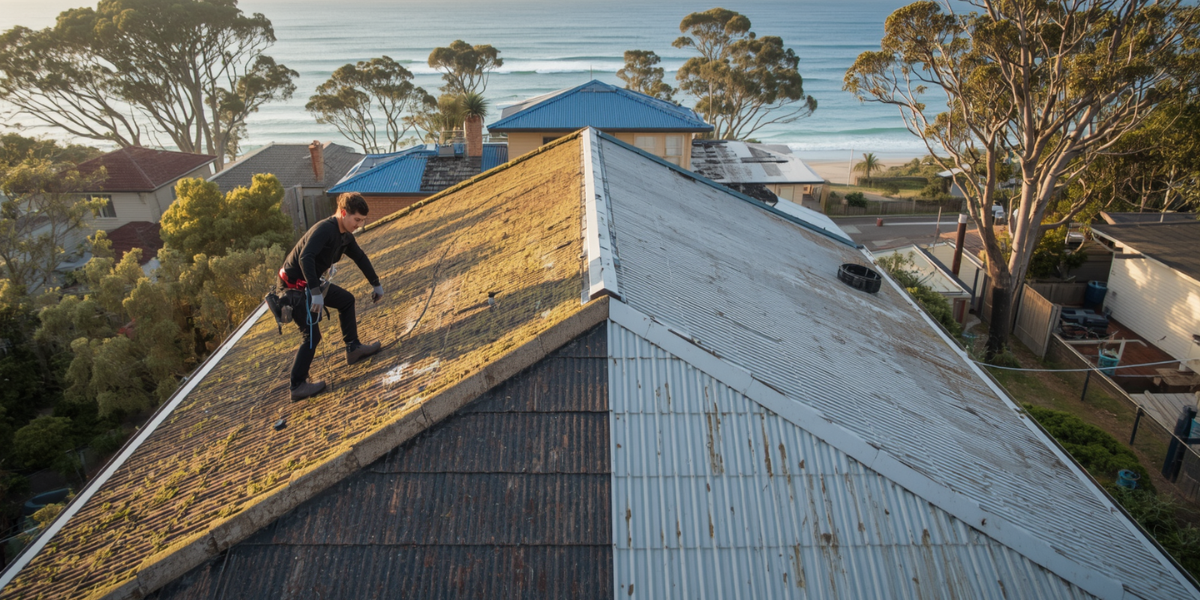
But in Wollongong’s coastal climate — with significant UV exposure, high humidity, salt air from the Tasman Sea, and the kind of moss and lichen growth that thrives in the Illawarra — roofs deteriorate faster than most homeowners realise. And the cost of ignoring a failing roof surface compounds quickly. This is central to good roof painting in Wollongong.
Here’s everything you need to know about roof painting in Wollongong in 2026.
Why Roof Painting in Wollongong Needs Extra Care
A few things specific to the Illawarra work harder on roof surfaces than in drier, less coastal areas: It’s a key step in roof painting in Wollongong.
Moisture and Humidity — the combination of coastal air, significant annual rainfall, and periods of high humidity creates ideal conditions for biological growth on roof surfaces. Moss, lichen, and algae colonise tile surfaces faster here than in Sydney’s western suburbs or inland areas. Skip it and your roof painting in Wollongong won’t last.
Salt Air — for homes closer to the Wollongong foreshore, North Beach, or the beaches through to Thirroul and Austinmer — airborne salt deposits on roof surfaces. Salt holds moisture and accelerates the breakdown of tile coatings and metal roof finishes. It matters for any roof painting in Wollongong.
UV Exposure — significant UV on north-facing roof pitches degrades concrete tile surface coatings and oxidises metal roofing. Once the protective coating is gone, the surface becomes progressively more porous and less water-resistant. This shapes the result of roof painting in Wollongong.
Tree Cover — many Wollongong and Illawarra properties have significant tree canopy. South and east-facing roof pitches under tree cover stay damp for extended periods after rain, dramatically accelerating moss and lichen growth. Plan for it in your roof painting in Wollongong.
How Much Does Roof Painting Cost in Wollongong in 2026?
Here are realistic price ranges for Wollongong and the Illawarra:
| Roof Type and Size | Approximate Cost |
|---|---|
| Small single-storey tile roof | $2,800 – $4,500 |
| Average 3–4 bedroom tile roof | $4,000 – $6,500 |
| Large or steeply pitched tile roof | $6,000 – $9,500+ |
| Metal or corrugated iron roof (small) | $2,500 – $4,500 |
| Metal or corrugated iron roof (large) | $4,500 – $7,000 |
| Colorbond roof (all sizes) | $3,000 – $6,500 |
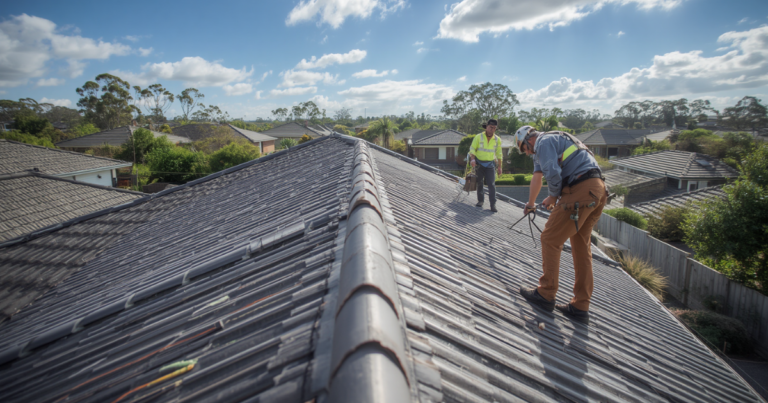
These figures include proper surface preparation, biological treatment, primer where required, and two quality topcoats. They also include appropriate fall protection — working safely at height is a cost that any legitimate roof painting job carries. It affects how long roof painting in Wollongong holds up.
Rebedding and repointing ridge cappings on older tile roofs is typically an additional cost — usually $1,000 – $2,500 for an average Wollongong home, depending on extent.
What Proper Roof Painting in Wollongong Looks Like
Step 1: Thorough Inspection
Before any work starts, the roof should be inspected for:
- Cracked or broken tiles — these need replacing before painting
- Ridge capping condition — is the bedding and pointing intact, or is it cracking away?
- Rust on metal surfaces — any affected areas need treatment before primer
- Extent of biological growth — moss and lichen indicate how intensive the prep needs to be
A painter who gives a quote without physically inspecting the roof isn’t giving you an accurate number.
Step 2: High-Pressure Wash
The entire roof is washed at high pressure to remove moss, lichen, algae, dirt, and any loose surface material. On Wollongong roofs with established biological growth, this step alone makes a remarkable visual difference — and it’s essential for paint adhesion.
Step 3: Biological Treatment
After washing, a fungicidal treatment is applied and allowed to work on the surface. This kills biological growth down to the spore level — critically important in the Illawarra’s humid conditions where moss and lichen will recolonise quickly without thorough treatment.
Skipping this step is one of the most common reasons a newly painted roof shows biological growth within 2–3 years.
Step 4: Rebedding and Repointing (Where Required)
On tile roofs, the mortar that beds and points the ridge capping is assessed. If it’s cracking, missing sections, or has softened — it needs to be replaced. Failing ridge mortar is one of the most common entry points for water in older Wollongong homes.
Step 5: Primer or Sealer
On concrete tile roofs that have become porous, a penetrating sealer locks down the surface before paint application. On bare or oxidised metal roofs, a rust-inhibiting primer is non-negotiable — topcoat applied directly to bare or rusted metal fails quickly.
Step 6: Two Quality Topcoats
Roof-specific paint — not standard house paint — is applied in two full coats. Products like Dulux Acratex Roof Membrane, Taubmans Roofmaster, and Haymes Roofers Choice are formulated for roof conditions: UV stability, flexibility for thermal movement, and water-shedding properties.
Tile Roof vs Metal Roof — Different Needs in Wollongong
Concrete and Terracotta Tile Roofs
These are the most common across Wollongong and the Illawarra. Older tile roofs develop porosity as their factory-applied surface coating weathers away. The tile starts absorbing water rather than shedding it — which leads to heavier biological growth and, over time, freeze-thaw damage (even in Wollongong’s mild winters, overnight temperature cycles create some movement).
A properly painted and sealed tile roof restores water resistance and extends the roof’s life significantly.
Metal Roofs (Corrugated Iron, Zincalume)
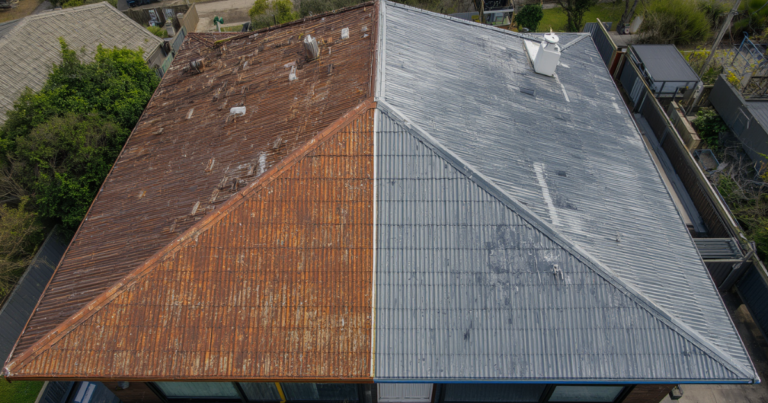
Older metal roofs in the Illawarra face rust risk, particularly in coastal zones where salt air accelerates corrosion. The prep process is critical: all rust must be treated, bare patches primed, and a topcoat system appropriate for metal applied.
Colorbond Roofs
Colorbond has a factory-applied finish that’s designed to last — but it can be repainted when the finish degrades. The prep and product requirements for Colorbond are specific. Be aware that repainting Colorbond may affect any remaining manufacturer warranty. If your Colorbond is relatively new (under 15 years) and in reasonable condition, speak to a professional about whether repainting is actually necessary at this stage.
Signs Your Wollongong Roof Needs Attention
- Heavy moss or lichen growth — particularly after wet periods
- Roof surface looks very dark or stained even after rain (biological growth absorbing moisture)
- Faded or patchy colour — surface coating has largely gone
- Ridge capping cracking or gaps visible from ground level
- Rust staining on gutters or walls from metal roof oxidation
- It’s been 10 or more years since the roof was treated
Is It Worth Combining Roof Work With an Exterior Repaint?
In most cases, yes. If your roof and exterior walls are both due for attention, doing both together:
- Shares scaffolding or access setup costs — a significant saving
- Ensures colour coordination between roof and walls
- Gets everything done in one disruption rather than two
At Colourland Painting, we often schedule roof and exterior work together for Wollongong homeowners to maximise value and minimise inconvenience.
Ready to Sort Your Roof?
Colourland Painting handles roof painting across Wollongong, Thirroul, Austinmer, Bulli, West Wollongong, and the broader Illawarra. We work safely at height, prepare surfaces properly, and use quality products designed for these conditions. If you’re considering roof painting in Wollongong, get us out to take an honest look first. Phone 0421 755 294 for a free quote. For roof material background, BlueScope (COLORBOND steel) is a useful reference.