Address: Wollongong NSW


Roof Painting Safety — What Homeowners Should Know Before Getting On a Roof
Every year in Australia, falls from height cause hundreds of serious injuries and fatalities. A significant proportion of these happen at home rather than on formal worksites. Roof painting safety matters whether you are doing the work yourself or overseeing a contractor.
The Reality of Roof Falls
Falls from a roof are categorically more dangerous than falls at ground level because the height typically results in impact with a hard surface after falling onto a pitched slope. Australian data shows that falls from height account for roughly 20 per cent of all serious workplace injuries, and a significant number of fall deaths occur in domestic settings. Sources: Safe Work Australia
The risk is not primarily about experience or confidence on a roof — it is about the combination of a sloped surface, potential weather, and the consequences of a single misstep at height.
When DIY Roof Work Is and Is Not Reasonable
Situations Where a Homeowner Might Safely Attempt Minor Roof Work
- Single-storey home with a low pitch less than 15 degrees
- Completely dry, calm weather conditions
- Only reaching to clean gutters or treat a small accessible section of moss
- Using a proper roof ladder hooked over the ridge rather than leaning a standard ladder against the surface
Situations That Require Professional Painters With Safety Equipment
- Any two-storey home
- Roof pitches above 20 degrees — classified as non-trafficable surfaces under work health and safety guidelines
- Any application of paint or sealer, which requires sustained work on the roof surface
- Wet conditions or after recent rainfall, when tiles become slippery
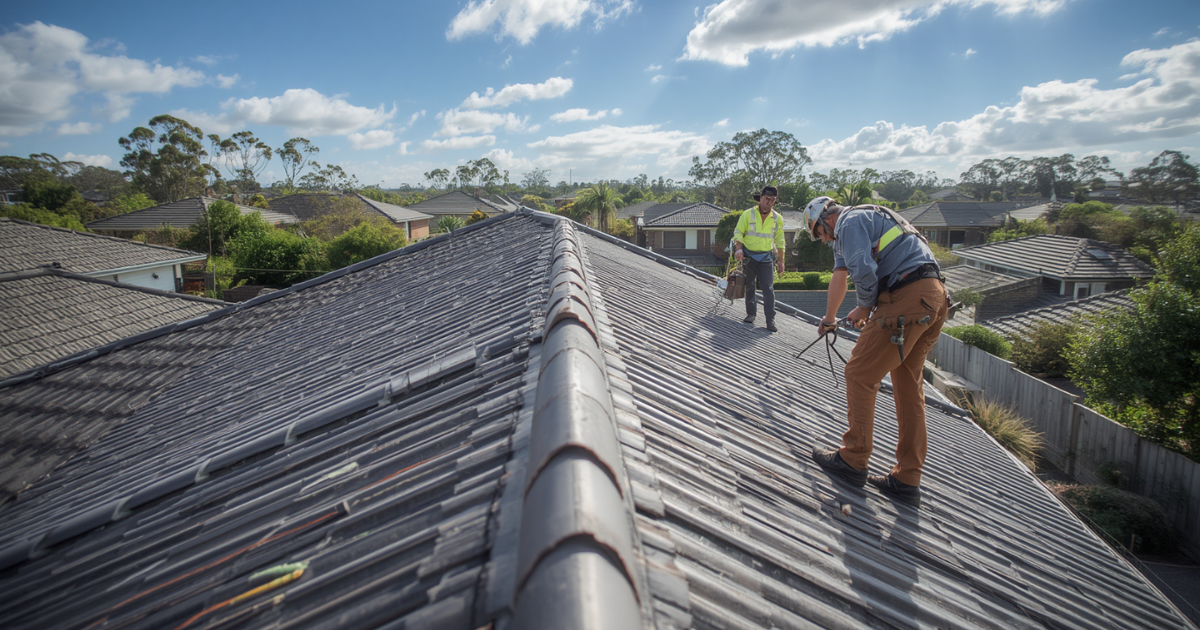
[ Screenshot: Professional roofers using appropriate harness and anchor safety equipment on a Wollongong roof ]
What Professional Roof Painters Should Have
When hiring a roof painter in Wollongong, verify that they:
- Hold a current contractor licence verifiable through NSW Fair Trading
- Carry current public liability insurance covering falls from height and property damage
- Can demonstrate they use roof anchor systems or harness equipment for pitched roof work
- Comply with the Model Work Health and Safety Act guidelines on falls from height, which apply in NSW. Sources: SafeWork NSW
Your Responsibilities as a Homeowner
When you hire a contractor, you have a duty of care as the person in control of the property. This includes:
- Informing the contractor of any known roof hazards — fragile sections, skylights, live electrical cables running near the eaves
- Ensuring children and pets are kept away from the work area while contractors are on the roof
- Not asking or expecting a contractor to skip safety equipment to save time or money
What Happens When a Contractor Is Injured on Your Property
If a contractor without appropriate insurance is injured while working on your roof, the liability picture is more complicated than most homeowners expect. While a licensed, insured contractor’s workers compensation system handles injuries to their employees, an uninsured sole trader who is injured on your property may have a claim against you as the site controller. Verifying both the licence and the public liability insurance before any roof work starts is a ten-minute process that can prevent a genuine liability exposure.
After the Job: Safety Check Before Reopening the Property
Before your roof painter leaves the site, do a quick walkthrough of the property perimeter to confirm that any scaffold, safety barriers, or equipment has been fully removed and that the access points used during the job are back to their normal state. A brief final inspection with the painter present before they leave is the right time to raise any concerns about the work itself — coverage uniformity, missed sections, or any surface areas that do not look right. Issues raised at final inspection are much more easily resolved than issues raised two weeks later by phone.
Final Thoughts
Roof painting safety is not a bureaucratic concern — it is a practical matter with real consequences. Hire professionals with the right equipment for any work above single-storey level, and treat any contractor who dismisses safety equipment as a cost-saving measure as a risk signal, not a bargain.
Our roof painters Wollongong team uses appropriate safety equipment on every job. For the full context of what professional roof painting involves in Wollongong, see our roof painting guide.